


By Dyson Mthawanji
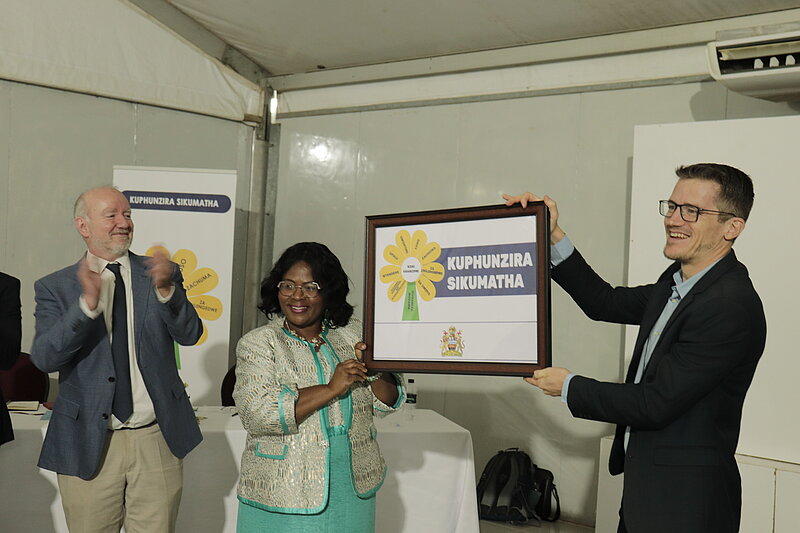
The Ministry of Gender, Children, Disability and Social Welfare has officially launched the 'Kuphunzira Sikumatha' campaign, describing it as an important initiative aimed at promoting lifelong learning in Malawi.
Lifelong learning is the ongoing, voluntary, and self-motivated pursuit of knowledge to improve one’s everyday life. It is not limited to formal education but encompasses learning in all aspects of life, across all ages, and in diverse settings. Adult learning and education is thereby seen as an integral part of lifelong learning.
However, in many countries including Malawi, it is still challenging to put the message across. In Malawi, the Ministry of Gender, Children, Disability and Social Welfare has therefore come up with the ‘Kuphunzira sikumatha’ campaign, a Malawian version of ‘lifelong learning’ in the local language Chichewa. `Kuphunzira sikumatha` literally means: Learning doesn’t stop. This campaign will help many people, mainly in rural areas, to fully understand what lifelong learning is about.
Through the campaign individuals will understand that learning is an on-going process and they should thus continue learning throughout their lives regardless of their current level of education and knowledge. For example, even those who did not acquire formal education are encouraged not to lose hope but to attain skills such as literacy and vocational skills.
Lifelong learning is particularly crucial for Malawi’s out-of-school populations and marginalised communities who lack access to formal education pathways. Currently, over 3.5 million youths and adults in Malawi require ALE services, aligning with the Sustainable Development Goal Number Four on “access to opportunities for lifelong learning.”
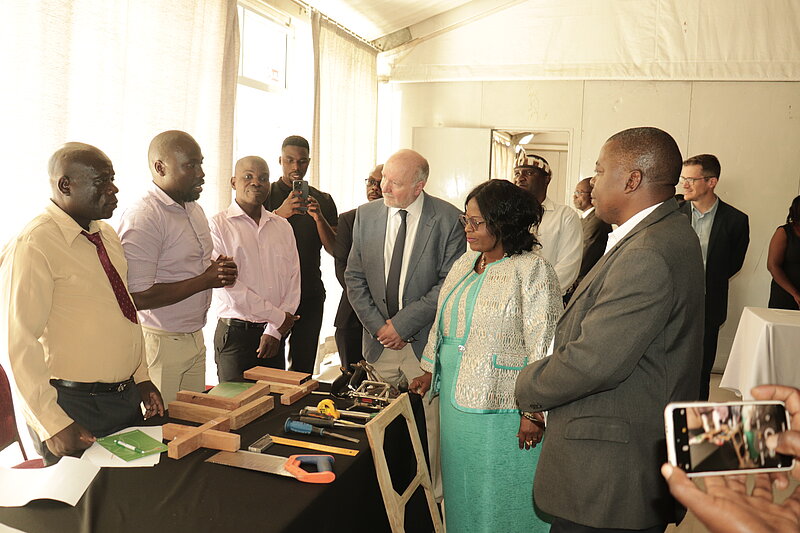
An ALE stakeholder mapping exercise which DVV International recently conducted showed that a considerable number of potential rural target groups demonstrate a limited understanding of what constitutes ALE. Many were unaware of its broad scope, which extends beyond literacy and numeracy to include financial literacy, vocational training, and various capacity-building initiatives for adults. Thus, the ‘Kuphunzira Sikumatha’ campaign will help to enhance people’s understanding of ALE.
Speaking during the official launch of ‘Kuphunzira Sikumatha’ launch on Thursday in Lilongwe, the Principal Secretary in the ministry of Gender, Dr. Esmie Kainja, said the campaign seeks to raise awareness of the broader scope of Adult Learning and Education (ALE) in Malawi.
Dr. Kainja said: “As a nation, we continue to face many social and economic challenges. To overcome them, we need citizens who are knowledgeable, skilled, and equipped to improve their livelihoods, participate meaningfully in society, and contribute to national development. Lifelong learning empowers entrepreneurs to manage their businesses effectively, enables farmers to adopt modern agricultural practices, helps parents make informed decisions, and strengthens communities to respond to emerging challenges.”
The Kuphunzira Sikumatha campaign comes at a time when Malawi continues to strive towards achieving Sustainable Development Goal 4 and Malawi 2063 Malawi 2062 First 10 Year Implementation Plan which calls for inclusive and equitable quality education and the promotion of lifelong learning opportunities for all.
DVV International Regional Director for Southern Africa, Dr. Johann Heilmann, said Malawi's ALE programmes have evolved beyond literacy and numeracy since the organisation began operating in the country in 2017.
“When we came here in 2017, adult education was mainly in the form of adult literacy and numeracy,” Heilmann said.
He said collaboration with the Ministry of Gender, Children, Disability and Social Welfare, academia, civil society organisations and other partners had helped develop a more holistic approach to adult education.
In his remarks, the acting German Ambassador to Malawi and Head of Development Cooperation, Dr. Andreas Hartmann, said lifelong learning is central to Germany's bilateral cooperation with Malawi, with a particular focus on supporting the country's most vulnerable populations.